If you work with structural steel long enough, you know the difference between surface rust and the kind that flakes in thick layer sand leaves deep pitting behind. You also know that most “new technologies”sound impressive until you put them on a real job site.
So let’s answer the question directly.
Yes, laser cleaning can remove heavy rust from structural steel. But the real answer is more nuanced than that. And that nuance is where most buyers either waste money or unlock a serious advantage.
Not all rust behaves the same.
On structural steel, you usually see one of three conditions:
Laser cleaning performs exceptionally well on the first two. On advanced corrosion, the laser will remove the rust layer, but it can not rebuild lost material. Deep pits will remain because that metal is already gone.
That distinction matters.
Laser cleaning removes contamination. It does not reverse metal loss.
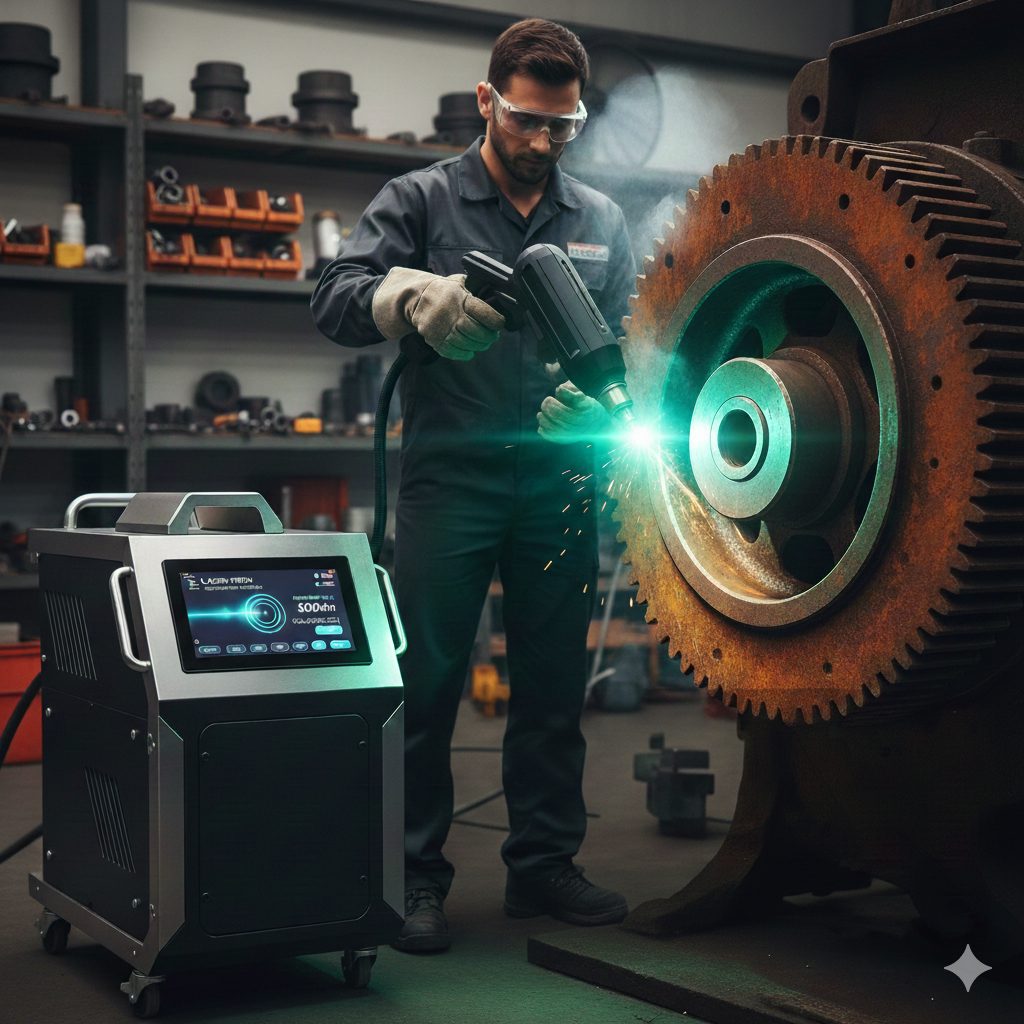
Rust absorbs laser energy far more readily than clean steel. When the beam passes over the surface, the rust heats rapidly and breaksapart. The underlying steel reflects more of that energy, which protects it from damage when settings are correct.
Unlike blasting, there is no abrasive impact. Unlike grinding, there is no mechanical removal of base material. Unlike chemicals,there is no residue left behind.
On structural steel, that means:
● No media embedding into the surface
● No warping of thinner sections
● No secondary cleanup of blasting grit
● No chemical disposal concerns
For many service contractors, that reduction in mess and containment is where the value becomes obvious.
This is where expectations need to be realistic.
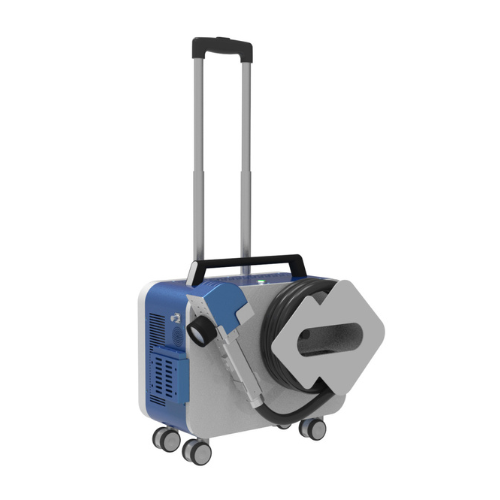
A hand held laser cleaning machine can absolutely remove rust from beams, columns, brackets, and structural supports. It is especially useful for:
● Weld prep zones
● Flange edges
● Connection plates
● Tight corners where blasting struggles
But power matters.
A small unit designed for fine restoration work will move slower on thick scaling. Higher power systems, particularly continuous wave models, increase throughput significantly on larger surfaces.
If your work involves full beam cleaning across wide spans, you need to consider both power and duty cycle. If your jobs are more localized or detail-focused, even a compact system can perform very well.
This is where laser cleaning earns its credibility.
Thick flaking rust can be removed effectively, but speed depends on:
● Power level
● Beam width
● Surface condition
● Operator technique
In real-world use, operators find that once the top scale layer is removed, the remaining oxidation clears more quickly. The first pass breaks the bond. The second refines the surface.
For structural prep before coating or welding, laser cleaning provides a clean surface without roughening the steel beyond what is necessary.
That is important when coating systems or inspection standards matter.
Laser cleaning becomes especially attractive when:
● The job site is sensitive or indoors
● Containment is difficult
● Cleanup costs are high
● Precision is required
● Clients are concerned about dust and debris
Contractors working in municipalities, utilities, or restoration often find that the ability to bring in a hand held laser rust remover reduces disruption and improves client perception. It looks controlled.It feels modern. And it eliminates a lot of mess.
Laser cleaning does not:
● Fill pits
● Restore lost structural thickness
● Instantly clear extremely deep corrosion in a single pass
● Replace every blasting application
If structural steel is severely compromised, repair or replacement is the solution, not surface cleaning. Understanding this keeps expectations realistic and avoids over promising to clients.
Speed varies, but on moderate to heavy rust:
● Smaller handheld systems may cover smaller areas steadily with high precision
● Higher power systems increase square footage per hour dramatically
Operators who use a hand held rust removal laser often report that once they refine their technique, cleaning speed improves noticeably after the first few jobs. Like welding or blasting, there is a learning curve. It is not steep, but it exists.
● Does this fit the types of jobs I already do?
● Will it reduce labor or cleanup time?
● Can I sell this as a premium service?
● Does it allow me to work in environments where blasting is restricted?
Laser cleaning is not just about rust removal. It is about service flexibility. For structural steel contractors, the ability to perform targeted cleaning without dust clouds or heavy containment changes how and where you can operate.
Yes, laser cleaning can remove heavy rust from structural steel.
It does it cleanly. It does it precisely. And when matched to the right power level, it does it efficiently.
But the bigger value is not technical. It is operational.
It gives service providers another tool that solves problems traditional methods struggle with. When used thoughtfully, it can expand the kind of jobs you can take on and how confidently you can take them.
If you are evaluating whether laser cleaning makes sense for your structural steel work, the smartest next step is not guessing based on videos. It is understanding how the technology performs on the exact type of rust and scale you deal with. That clarity is what separates curiosity from a smart investment.

.png)

.png)

